
The woman ahead of me in the café kept repeating a small, familiar motion. She lifted her mug, noticed her reflection in the glass, and gently slipped a silver strand behind her ear, as if time itself could be tucked away. Her hair wasn’t fully grey. It was more like a soft crown of light at her temples, glowing in the early sun. Not severe. Not aging. Just honest.
A few years back, she likely would have booked a color appointment the instant those first strands appeared. Permanent dye, frequent root touch-ups, the endless routine.
Now, her hair looked quietly radiant, as though the grey had been woven in rather than wiped out.
 The Ordinary New Serum Nicknamed Filler in a Bottle Gave My Skin a Youthful Look in My 40s
Something real is changing on people’s heads, and it goes far beyond another seasonal balayage.

Why Classic Hair Dye Is Slowly Losing Its Hold
Spend a little time in a busy salon and actually listen to the conversations at the color chairs. Clients aren’t just saying “cover my greys” anymore. Instead, you’ll hear softer requests: “Can we blend them?” “I don’t want harsh regrowth.” “I want to look refreshed, not overdone.”
The old instinct to erase every white strand with a single, solid shade is starting to feel heavy, outdated, and exhausting.
A new understanding is taking shape: grey itself isn’t what ages us. It’s the sharp contrast that does.
A colorist in Paris shared that five years ago, nearly 80% of her clients over 35 asked for total coverage. Today, almost half request natural blending. The same shift is happening in New York, London, and Barcelona.
On TikTok and Instagram, posts tagged with “grey blending” are everywhere. Women in their forties and fifties stand bare-faced in their bathrooms, showing clear comparisons: before, with flat, uniform color; after, with layered tones where silver melts into caramel or ash.
Even on a phone screen, the change is obvious. Hard color blocks disappear. Faces look clearer, eyes brighter, jawlines more defined. They don’t look artificially younger. They look well-rested.
The logic behind this shift is simple. When hair is dyed one opaque shade, regrowth announces itself almost immediately. A stark white line at the roots draws attention straight to the scalp.
When grey is blended gradually into the base color, the eye stops searching for that line. Instead, you notice movement, light, and dimension. Not “roots.”
Colorists explain that each grey hair acts like a tiny mirror, reflecting light where fully dyed hair can look flat. Used intentionally, those silver strands become a built-in highlighter. The key isn’t fighting them, but arranging them.
The Soft Revolution: Blending, Glazing, and Natural Techniques
So what’s actually replacing full-coverage dye? The word professionals use most often is “blending.” This usually means ultra-fine highlights and lowlights that echo the way hair naturally shifts with age, rather than masking grey completely.
Think of it like a soft-focus lens. A few whisper-thin pieces slightly lighter than your base, a few a touch deeper. The grey weaves into the pattern and stops standing out.
Many are also moving away from permanent color and toward translucent glazes. These sheer formulas boost shine, gently neutralize dull or yellow tones, and soften greys without smothering their natural sparkle.
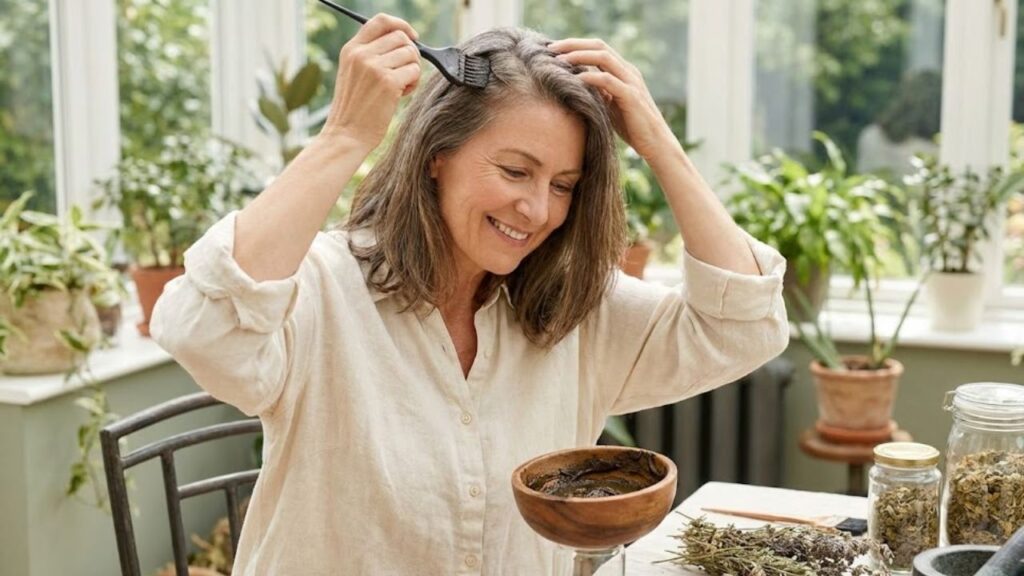
At home, the approach is just as creative. Some people use tea or coffee rinses once a week to give grey hair a beige or light chestnut tone that blends more easily. Others rely on cassia or low-dose henna mixes, not for red color, but to add a subtle golden wash.
There’s also a quiet return to hair oils infused with natural pigments like walnut shell or amla, which gently warm or deepen the hair fibre. The aim isn’t reinvention. It’s subtle adjustment.
These routines don’t take over daily life. They slide naturally into evenings spent watching a series, answering emails, or waiting for dinner to cook.
According to colorists, the real breakthrough isn’t the product, but the plan. Full coverage demands constant upkeep. Miss one appointment and regrowth takes over.

Blending stretches that schedule. Many people move from coloring every four weeks to every ten or twelve. That means less chemical stress, less dryness, less breakage, and far less mental pressure.
You stop fearing close mirrors. Grey becomes something you manage occasionally, not an emergency every fortnight. For many, that shift alone changes how they carry themselves.
How to Transition Without a Drastic Moment
Experts agree the first step isn’t a product, but awareness. Take a close look at where your grey actually appears. At the temples? In the fringe? At the crown? That pattern matters.
One gentle approach is to ask your colorist for micro-highlights in those areas instead of full coverage. Tiny, precise pieces, not bold stripes, just enough to break up the grey and blend it into a new rhythm.
At home, toning shampoos with violet, blue, or pearl pigments help keep grey and natural strands in the same color family, so they look related rather than mismatched.
A common mistake is going too dark out of fear. When the first white hairs appear, many people choose a shade two or three levels deeper than their natural color. It may look glossy in photos, but in reality it hardens the face and exaggerates regrowth.
If you’re stepping away from heavy dye, most professionals recommend going slightly lighter and softer, not darker. Think warm brown instead of deep espresso, dark blonde instead of black.
That unsettling feeling after a color appointment usually isn’t about grey. It’s about contrast that no longer suits you.
There’s also an emotional side to this transition. Hair isn’t just hair. It’s identity, age, and visibility. One stylist in Milan shared that half her sessions are spent talking, not coloring.
“Grey blending isn’t a trend,” she said. “It’s permission. You can stay sharp and still let time show a little.”
To keep things manageable, many colorists suggest a simple path:
- Gradually extend dye appointments by one or two weeks.
- Ask for partial blending around the face at your next visit.
- Swap permanent root color for demi-permanent shades or glazes.
- Use one targeted home product, not a full shelf.
- Give the process six months before judging results in photos.
Rethinking Age, Style, and What Youth Really Looks Like
Behind this technical shift is a deeper change. When people embrace softly blended grey or natural tones, you notice their faces first. Eyes, skin, expression. Hair returns to being a frame, not a disguise.
Online reactions reflect this. Comments rarely focus on technique. Instead, they say things like “You look like yourself again” or “Your haircut finally shows.” It’s as if letting go of the constant battle with grey frees energy everywhere else.
There’s also a quiet rejection of the old idea that youth means dark, uniform hair. Today, youthfulness reads as light around the face, shine, movement, and health. A well-cut style with shimmering silver threads often delivers that better than a solid block of color.
Blend, don’t erase: Using highlights, lowlights, and glazes creates softer regrowth, fewer salon visits, and a more natural sense of freshness.
Go lighter, not darker: Avoid heavy, high-contrast shades that harden features and spotlight roots.

Choose gentle routines: Plant-based rinses, demi-permanent color, and targeted toning keep hair healthier and maintenance realistic.
