
Spending long hours seated at a desk can quietly take a toll on posture. Rounded shoulders, a hunched upper back, and persistent neck strain often develop so slowly that they begin to feel normal. Over time, this misalignment can cause chronic discomfort, ongoing fatigue, and limited movement. The encouraging part is that posture can be improved through simple, consistent yoga poses. You do not need long workouts. A few focused movements practiced mindfully can help realign the spine and retrain the body to sit and stand properly.
Why Desk Jobs Harm Posture So Fast
Desk-based work places the body in unnatural positions for extended periods. A forward head, rounded shoulders, and a curved lower back weaken key postural muscles while others become overly tight. The chest gradually shortens, the upper back stiffens, and the neck ends up supporting more weight than intended. As this pattern continues, the body adapts, making poor posture feel natural even when standing or walking.
Yoga helps reverse these changes by stretching tight areas while strengthening weaker muscles at the same time. The following three poses are particularly effective for desk workers because they address the spine, shoulders, and core, where posture issues most commonly start.

Mountain Pose to Restore Natural Alignment
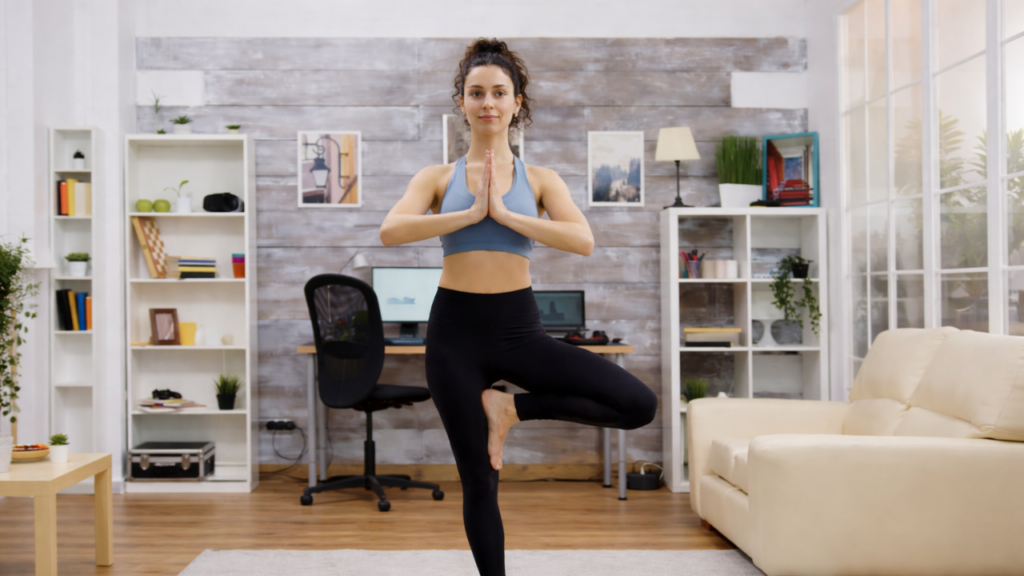
Mountain Pose appears simple, yet it is one of the most effective poses for posture correction. It teaches the body how proper alignment should feel. For desk workers, this pose reactivates the muscles that support the spine and helps correct imbalances created by prolonged sitting.

Stand with your feet hip-width apart and distribute your weight evenly. Gently engage the thighs, lift the chest without forcing it forward, and roll the shoulders back and down. Lengthen the neck and imagine the crown of the head rising upward. Breathe slowly while holding the pose for one to two minutes.
Practicing Mountain Pose daily builds postural awareness. Over time, this awareness naturally carries into how you sit and stand during the day, reducing slouching without conscious effort.
Cobra Pose to Open the Chest and Support the Spine
Cobra Pose is highly effective for countering the rounded spine common among desk workers. Long hours of sitting compress the chest and weaken the muscles along the back. Cobra gently reverses this by opening the front of the body while strengthening the spine.
Lie face down with your palms placed beneath the shoulders. Press lightly into the hands and lift the chest, keeping the elbows close to the body. The movement should come from the upper back rather than forcefully pushing through the arms. Keep the shoulders relaxed and avoid straining the lower back.
Hold the pose for 20 to 30 seconds and repeat it two to three times. Cobra Pose improves spinal mobility, reduces upper back stiffness, and gradually restores the spine’s natural curve.
Seated Forward Fold to Ease Neck and Shoulder Tightness
Good posture is influenced not only by strength but also by flexibility. Tight muscles can pull the body out of alignment. Seated Forward Fold helps release tension in the neck, upper back, and hamstrings, all of which affect posture for desk workers.
Sit with your legs extended and the spine upright. Inhale to lengthen the spine, then exhale as you hinge forward from the hips. Let the neck relax and allow the head to hang naturally. Avoid forcing the stretch and maintain steady, calm breathing.
 The Ordinary New Serum Nicknamed Filler in a Bottle Gave My Skin a Youthful Look in My 40s
Holding this pose for about one minute helps calm the nervous system and releases tight muscles that contribute to forward head posture. With regular practice, it balances strength and flexibility, which is essential for long-term posture improvement.
How Often Desk Workers Should Practice
For visible results, practice these three poses at least five days a week. The routine takes under ten minutes, yet it delivers noticeable benefits when done consistently. Practicing in the morning prepares the body for the workday, while evening sessions help undo the strain caused by hours of sitting.
Consistency is more important than duration. Short daily sessions retrain muscles and joints more effectively than occasional long workouts.
Common Desk Posture Errors to Avoid
Yoga works best when combined with mindful desk habits. Avoid sitting for long periods without movement. Keep your screen at eye level, your feet flat on the floor, and take brief breaks every hour to stand, stretch, or walk.
Also avoid overcorrecting posture by forcing the chest forward or pulling the shoulders too far back. Healthy posture feels balanced and relaxed, not tense or rigid.
The Link Between Breathing and Posture
Breathing plays a major role in posture. Shallow breathing tightens the chest and neck, which worsens slouching. During yoga practice, focus on slow, deep breaths that expand the rib cage and support spinal alignment. Over time, better breathing habits naturally improve posture even outside of practice.
Final Thoughts on Yoga for Desk Worker Posture
Improving posture does not require complex routines or special equipment. Simple yoga poses practiced regularly can reverse years of poor desk habits. Mountain Pose rebuilds alignment, Cobra Pose strengthens and opens the spine, and Seated Forward Fold releases tension that pulls the body forward.
When paired with awareness and consistency, these three poses help desk workers sit straighter, stand taller, and move with less discomfort. Better posture supports physical health while also improving energy, confidence, and long-term comfort at work.
